AI Assistant
A focused conversational workspace for asking questions, generating ideas and solving complex tasks with AI assistance.
AI Workspace Platform
An intelligent AI workspace that brings together multi-model conversations, document understanding and contextual workflows in one focused browser experience.
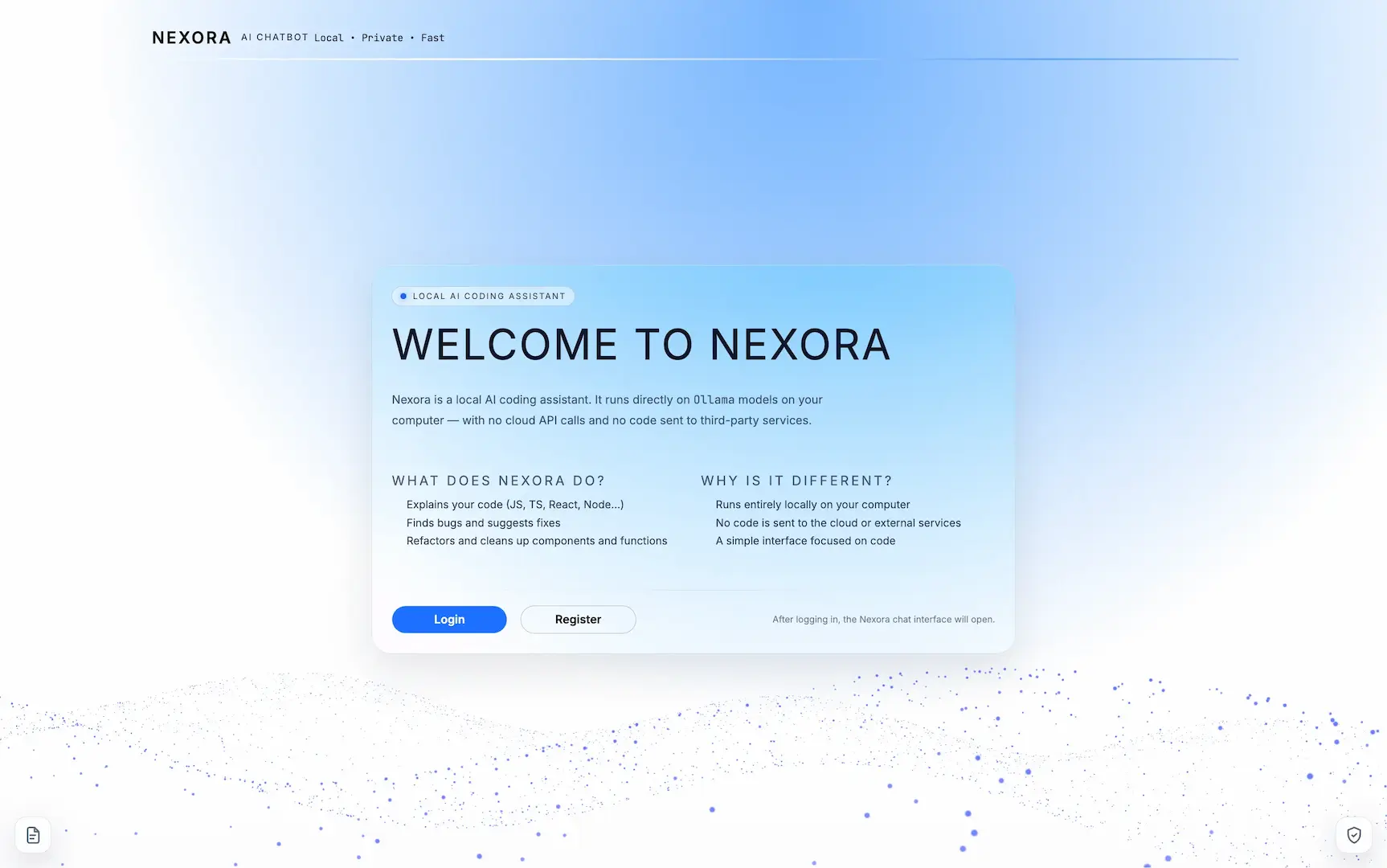
Overview
Nexora AI brings multiple AI models, documents and contextual workflows together in a single workspace designed for focused productivity. Instead of treating AI as a standalone chat, the platform organizes prompts, knowledge sources and conversations into a structured environment that supports real project work.
Features
A focused conversational workspace for asking questions, generating ideas and solving complex tasks with AI assistance.
Select the most suitable AI model for each task, combining different strengths within a unified workspace.
Documents and project files can become part of the workflow, allowing AI responses to be grounded in provided content.
The experience focuses on turning AI from a simple chat tool into a structured assistant for real project work.
Workflow
The workflow starts with a request, question or task entered through the workspace interface.
Relevant project content, documents or previous conversation context can be attached to the request.
The selected model processes the request and generates a response based on the provided task and context.
The final result is returned into the workspace as usable text, explanation, plan or generated content.
Technology
FAQ
Most AI tools focus on individual conversations. Nexora AI approaches the problem differently by combining conversations, documents, project context and multiple AI models into a single structured workspace, making AI more practical for real software development and knowledge work.
Different language models excel at different tasks. Rather than relying on a single provider, Nexora AI is designed so the workflow can choose the most appropriate model for coding, reasoning, document analysis or creative writing, making the platform more flexible over time.
Instead of answering only from a prompt, the workspace allows project files, documentation and previous conversations to become part of the request. This gives the selected model richer context and produces responses that are more consistent with the user's project.
Real projects involve documents, notes, conversations and multiple tasks happening at the same time. The interface was designed around workflows instead of isolated chats so users can keep project knowledge connected rather than starting from scratch every session.
The architecture separates the user interface from AI providers, allowing additional language models, document processing services and future backend components to be integrated without redesigning the entire application. This modular approach improves long-term maintainability.
The platform is designed with private deployment scenarios in mind, where AI providers, document storage and inference endpoints can be configured independently. This makes it possible to adapt the system to environments with stricter security or compliance requirements.
The biggest challenge was designing an interface that remains simple while supporting increasingly complex workflows. Every feature had to contribute to productivity without overwhelming the user, requiring a balance between functionality, usability and future scalability.
The project prioritizes modular architecture, clear separation of responsibilities, scalable integrations and maintainable workflows. Instead of tightly coupling features together, the design encourages components that can evolve independently as AI technologies continue to advance.
Nexora AI demonstrates system architecture, AI workflow design, multi-model integration, user experience planning and scalable software thinking. Rather than presenting AI as a simple chatbot, the project focuses on designing an extensible platform capable of supporting complex, real-world productivity workflows.